Diogo Peralta Cordeiro
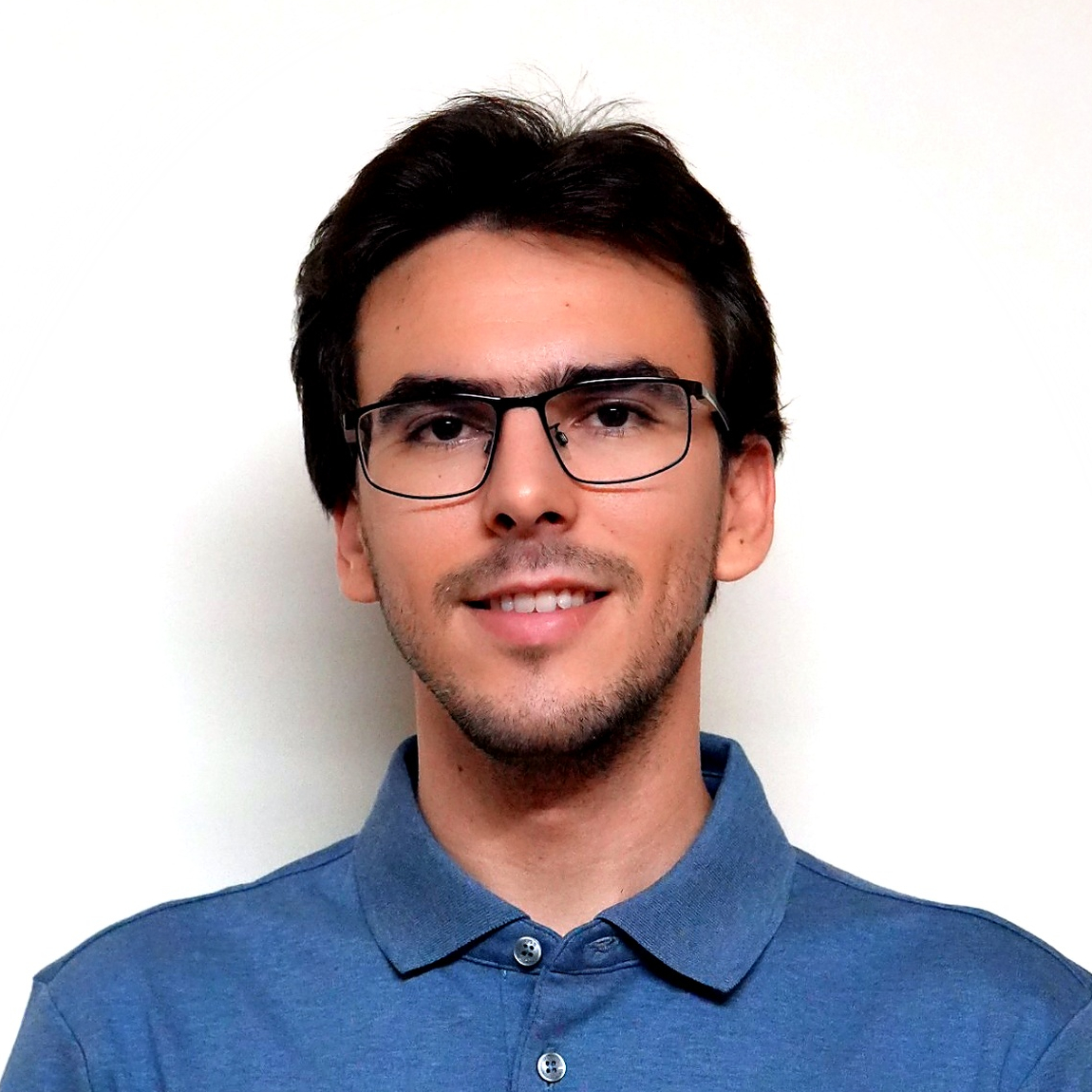
Portrait of Diogo Peralta Cordeiro

Diogo Peralta Cordeiro

Computer scientist · software systems · technical leadership · applied research

  • Senior Software Engineering
  • Technical Project / Program Management
  • Research & Teaching

Software engineering, technical project management, applied research and Computer Science teaching — with emphasis on ownership, mentoring and rigorous systems thinking.

mail@diogo.site · Porto, Portugal

Full professional dossier — Complete CV: research, engineering, teaching, talks, training, honours and testimonials. · download as typeset PDF

Profile

I am a computer engineer from Porto, Portugal. My path into computing began in 2010, shortly after I first got access to a computer: I learnt programming logic, then C, and wrote small scripts to make tedious tasks disappear. The years that followed were spent around UNIX, multimedia and programming — first as a hobby, then as a degree, now as a profession.

I read Computer Science at the University of Porto and am currently a PhD candidate in Electrical and Computer Engineering at its Faculty of Engineering, where my work sits at the intersection of machine perception, interaction design and dependable systems. Alongside research, I provide systems analysis, strategic consulting and tailored training through Apontamento Cordial.

Away from the keyboard, I enjoy music, art and old TV shows, as well as tennis, jazz and contemporary dance, books, board games and time with friends.

How I work

Team work. I work in globally distributed teams as part of free/open-source software projects. I volunteered at ACM-ICPC 2019 and I am a founding member of the Hackers at Porto student society.

Mentoring. I mentored for The GNU Project/GNU social within Google Summer of Code from 2019 to 2021, and I have mentored students in events and workshops organised by Hackers at Porto and the University of Porto's computer-science student groups.

Selected Impact

Technical leadership across research and production

Software, systems and research contexts

Engineering ownership. Led funded open-source platform development, coordinated contributors, made architectural decisions, and maintained a public-facing technical roadmap.

Research-to-system translation. Worked across dependable computing, robotics, machine perception and spatial interaction, keeping practical deployment constraints in view.

Project and program execution

Milestones, stakeholders, risk and delivery

Execution discipline. I structure projects around clear goals, written decisions, risks, interfaces and incremental delivery.

Stakeholder fluency. I can communicate with engineers, researchers, students, institutional partners and non-technical decision-makers without losing technical precision.

Teaching, mentoring and curriculum design

Computer Science and engineering education

Teaching practice. Delivered workshops and talks on Git, dependable computing, embedded systems and decentralised networks.

Pedagogy. Completed evidence-based undergraduate STEM teaching training and a Portuguese trainer certification, with a focus on active learning and practical technical competence.

International senior-role readiness

Remote-friendly, English-working, US-facing roles

Work posture. Comfortable with English-speaking, distributed and documentation-heavy environments. I am particularly interested in teams where seniority means raising technical quality, reducing ambiguity and mentoring others.

Experience

Systems Analyst

Apontamento Cordial

Strategic consulting. I conduct in-depth analyses of existing systems and processes, identify improvement opportunities, and recommend strategic solutions that raise productivity.

Tailored training. I design and deliver customised training programmes that meet the specific needs of client companies, equipping teams with the knowledge and skills to use technology effectively and fostering a culture of continuous learning.

Client-centric collaboration. I work closely with clients to gain a deep understanding of their needs and objectives, ensuring that training and consulting services align seamlessly with their strategic goals.

Dependable Computing in the Aerospace Sector

University of Porto

In September 2022 I joined the ANTAEUS project as a member of the on-board data-handling (OBDH) team. Our mission is to design and launch a 2U CubeSat to perform scientific measurements in the 100 keV – 10 MeV energy band and to validate a 2U instrument for future space high-energy astrophysics observatories. The project is led by the University of Coimbra in partnership with the Laboratory of Instrumentation and Experimental Particle Physics (LIP) and the University of Beira Interior. Its main scientific and technological conclusions will contribute to enhanced instrumentation for M-class high-energy astrophysics mission proposals in which the University of Coimbra participates, as well as to high-energy astrophysics based on a CubeSat constellation.

In October 2023 I became a supervisor of the Porto Space Team student society, having joined in July 2022 as head of its Department of Software and Computer Engineering, responsible for data handling in project INVICTUS — a hybrid-propellant (H3 category) rocket for the European Rocketry Challenge (EuRoC 2023), targeting a 3 000 m apogee and a safe parachute-assisted recovery.

Lead Software Engineer

GNU social — the free-software social networking platform

GNU social is social communication software written in PHP for public and private communications. It is widely supported, counts the Free Software Foundation among its users, and connects a free network of thousands of communities. Project website: gnusocial.rocks.

In February 2021 I received funding through the European Union's Horizon 2020 research and innovation programme, under the NGI0 Discovery Fund grant agreement No 825322 (2021-02 to 2022-02), to lead the development of version 3, which features a high degree of accessibility, customisation and expansion via plugins. The fund is a European Commission initiative that aims to shape the Internet into an Internet of Humans.

In January 2021 I designed the new architecture for v3, guided the development of the new major release, introduced a new data representation and a new attachment mechanism, and ported much of v2 to v3.

Another highlight from 2021 was authoring FEP-2100, which allows ActivityPub actors of type "Group" or "Organization" to follow other such actors.

Research Intern, Multimedia Communications Technologies

Centre for Telecommunications and Multimedia (CTM), INESC TEC

With the advent of machine-learning methods there has been extensive research in human detection, tracking and activity recognition. Inherent to this is the analysis of human pose using skeleton models that connect information extracted from the scene to the human body — information that parametric human models can also use to create virtual 3D representations.

During this internship I surveyed the state of the art in parametric human-body models, implemented the infrastructure required to test them, and produced a final analysis and comparison. The work was distinguished as the best of the MCT category by the jury of the Summer@CTM 2022 internship programme.

Robotics Engineer (research internship)

Underwater Systems and Technology Laboratory (LSTS), FEUP

Supported by a research grant (BII) from the Portuguese Foundation for Science and Technology. Our interdisciplinary student team further developed a low-cost autonomous surface vehicle, designed a docking station, and began work on a manoeuvre to enable autonomous docking in the LSTS toolchain. The manoeuvre uses a vector-field guidance algorithm to find the optimal trajectory and, when close to the station, tracks a target with the camera module. The vessel uses an IMU, a GPS, a camera and a Raspberry Pi 4.

Co-founder & CTO

Kult — the social network to discover, save and discuss content with friends (incubated at UPTEC)

Kult received support from the Grant for the Web flagship programme (2021-06 to 2021-12) and from IAPMEI's StartUP Voucher full grant (2020-06 to 2021-06). I was involved in the whole product conception, conducted numerous technical interviews and designed the base backend architecture.

Mentor / Director of Studies

GNU social

Organised Google Summer of Code (GSoC) at GNU social in 2019 and 2020, mentoring four students, and organised GNU social Summer of Code — a community-funded programme modelled on GSoC — mentoring one student in 2020. In the autumn term of 2020, GNU social was one of the projects in FEUP's Software Development Laboratory master's module (MIEIC-LDSO), where I helped mentor eight fourth-year informatics-engineering students.

Selected contributions with mentored students:

  • 2020-03-31 to 2020-09-08, as GSoC mentor of two students:
    • Full core rewrite — modernise the codebase by replacing unmaintained libraries and redesigning the framework on Symfony instead of PEAR.
    • New frontend — a modern frontend improving UI and UX, reviewing every controller for optimised queries and caching.
  • 2019-04-27 to 2019-08-26, as GSoC mentor of two students:
    • Network services improvements — OpenID support, URLMapper, fluid transitions between federation protocols, and further ActivityPub development (queues, collection caching, audience targeting, inbox forwarding, groups).
    • Optimisations on load balancing and storage — improved media handling, refactor of the Embed plugin, Redis support, improvements to Memcached support.

Google Summer of Code is a global programme focused on bringing more student developers into open-source software development through a three-month project with an open-source organisation.

Home-server systems administration

Personal infrastructure

Since 2016 I have managed a self-hosted Debian server with high uptime for websites and services. I deploy and maintain Nextcloud for secure cloud storage (over 200 GB of data, RSS feeds and DAV-synced calendars/contacts), Mailcow for personal e-mail, Kanboard for project management and Gitea for Git repositories. I host an SFTP server for a knowledge community, managing more than 2.5 TB of data with varied permission levels, and run Ejabberd (XMPP) and a ZNC bouncer (IRC) for messaging. Throughout, I have implemented monitoring, backup and automation scripts and continuously tuned configurations. In October 2024 I added an OPNsense firewall for increased security.

Embedded Systems Programmer

Fun with Binary

  • A web app with ESP8266-based output in which students enter the binary representation of a decimal number given by the game; a physical box switches light bulbs on and off according to the input and validates the answer.
  • Written in JavaScript, Arduino C, HTML5 and CSS3 (the first version also used PHP).
  • Entirely developed by me and used to this day at the University of Porto.
  • Code: code.undefinedhackers.net/diogo/fun-with-binary.

Education

PhD in Electrical and Computer Engineering

Faculty of Engineering, University of Porto

Supervisor: Prof. João Tasso de Figueiredo Borges de Sousa.

Specialisation: Automation Engineering. Field of study: information engineering, computer science, intelligent systems, robotics, systems and control.

Coursework: real-time embedded systems, intelligent mobile robotics, network science, computer vision.

Activities and societies:

  • Supervisor of Porto Space Team (2023-10-03 → present)
  • Member of the ANTAEUS CubeSat project (2022-09-21 → present)
  • Member of Porto Space Team (2022-07-12 → 2023-10-03)

BSc in Computer Science

Faculty of Sciences, University of Porto

180 ECTS, of which 54 ECTS in Mathematics.

Activities and societies:

  • Member of EUGLOH's Joint Curricula Design work package and Student Board (2020-07-13 → 2021-07-30)
  • Member of the Faculty of Sciences' Pedagogical Council (2019-11-05 → 2022-06-17)
  • Freshers' teaching assistant for the Computer Science Department (2019-09-10 → 2021-07-30)
  • Founding member of the Hackers at Porto student society (since 2017-11-01)

Key contents:

  • Mathematics — numerical analysis, stochastic processes, operations research, linear algebra, analytic geometry, multivariable calculus, differential equations
  • Computing theory — graphs, logic and proof, computability, complexity, reactive systems
  • Computer systems — computer architecture, computer networking, operating systems
  • Programming — compiler construction, advanced algorithms and data structures, multiprocessor programming
  • Applications and professionalism — intelligent systems, interaction design, security, privacy, databases
  • Electrical engineering — automatic control, digital signal processing

Exchange studies — Societal Resilience (7.5 ECTS)

Lunds Tekniska Högskola (LTH), Lund University — Erasmus+/EUGLOH

The course provides an understanding of society's challenges and the functions necessary for resilience in the face of events threatening safety and sustainability, and of approaches for contributing to societal resilience through disaster-risk management and climate-change adaptation for sustainable development in a changing world. It also forms a foundation for research in these areas.

Designed around critical thinking on societal safety and sustainability, it is structured in modules with lectures, seminars and role-play that illuminate central concepts, questions, challenges and functions for societal resilience, following case studies from countries with different conditions.

Exchange studies — Entrepreneurial Skills (1.5 ECTS)

Lund University School of Economics and Management (LUSEM) — Erasmus+/EUGLOH

The course introduces the development process of an entrepreneurial project, the entrepreneurial mindset needed for that process, and the dynamics of teamwork — skills called for by a global society facing challenges that need new, creative solutions under uncertainty.

It concluded with a two-day hackathon in which teams delivered a solution to a challenge in Global Health. Out of six competing teams, ours was ranked best.

Specialised Training

CubeSat Concurrent Engineering Workshop 2023

ESA Academy, ESA ESEC

A training session introducing university students to the concurrent design of a CubeSat mission. Guided by ESA experts, students learn to use COMET (Concurrent Model-based Engineering Tool) and to identify design drivers; divided into teams, they first create a subsystem concept and then realise an identified mission concept, function tree and product tree using concurrent engineering.

Key topics:

  • Introduction to concurrent engineering, systems engineering and requirements — Robin Biesbroek
  • CubeSat missions and technologies — Camille Pirat
  • CubeSat architectures — Ilja Skrypnyk
  • Increasing RAMS for CubeSats — Silvana Radu

Fly Your Satellite! Design Booster — Training Week

ESA Academy, ESA ESTEC

ANTAEUS, a prospective Fly Your Satellite! Portuguese team, attended this training week to deepen its knowledge of spacecraft design and project management.

Covered topics included: project management principles and COTS; legal aspects of CubeSat missions; communications and outreach; systems engineering principles; AIV and testing; introduction to MBSE; data-handling subsystem design and verification; flight-software development; EPS design and verification; structural, thermal and mechanisms design and verification; project management for CubeSats; AOCS design and verification; spacecraft operations; TT&C and ground segment; RAMS of CubeSats (FMEA, HSIA, FDIR); space-debris mitigation and trackability; and CubeSat mission analysis — delivered by ESA specialists including Alexander Kinnaird, Tomasz Szewczyk, Volkan Salma, Silvana Radu and David Evans.

Startups School

UPTEC — Science and Technology Park, University of Porto's business incubator

A programme designed to prepare entrepreneurs for the challenges of creating and developing a new business project. Over three months, participants work with new tools, concepts, structures and people that help validate an idea in the market.

Covered topics included: business models; patents and protecting intellectual property; differentiation and strategy; pricing, marketing and selling; problem mapping; public communication; structuring a pitch; fundraising from venture capital; doing business with the USA; taxes; term sheets; and digital marketing.

Introduction to Bayesian Statistics: Fundamentals, Methods and Applications

CMUP · IST-UL (post-graduate mini-course)

Taught by professors Carlos Daniel Paulino and Giovani Loiola da Silva, and promoted jointly by the University of Porto's Mathematics Centre (CMUP) and the University of Lisbon's School of Engineering (IST-UL).

Topics: Bayes' theorem and the essence of Bayesian methodology; representation of a-priori information (non-informative and natural conjugate distributions); applications to problems with exact or asymptotic solutions (linear Gaussian models, categorical data); inference by stochastic simulation and traditional Monte Carlo; model evaluation, selection and comparison; MCMC methods and their implementation in OpenBUGS/JAGS; applications to practical problems across scientific fields.

Summer & Winter Schools

Cognitive and Affective Neurophysiology Summer School

Faculty of Psychology and Education Sciences, University of Porto

A 36-hour course on the acquisition, processing and analysis of EEG signal, held at the Laboratory of Neuropsychophysiology. Topics included introductions to EEG and ERP, ERP research design, principles of EEG data collection, signal processing and data extraction, statistical analysis of ERP data, and reproducibility and open-science practices in EEG/ERP research — taught by Fernando Ferreira-Santos, Fernando Barbosa, Tiago O. Paiva and colleagues.

SYSTEC Summer School — Estimation, Control, Optimisation and Data Science

Faculty of Engineering, University of Porto

Organised by the Research Centre for Systems and Technologies (SYSTEC) in collaboration with the ARISE associated laboratory, providing experience with applications of cyber-physical systems in robotics, energy, mobility, production systems and health.

Covered topics: introduction to drones; deep and machine learning; optimisation; path-following control for autonomous vehicles; optimisation in industrial settings; designing robotic solutions with freeware tools; and electric mobility case studies.

Introduction to Robotics for Ocean Observations, Archaeology and Ecosystems Mapping

Faculty of Engineering, University of Porto

Topics and lecturers included: terminology and basic concepts in maritime robotics, and models, planning and control — João Tasso de Sousa (LSTS); sensors — Paulo Dias; vehicles — Maria Costa; underwater communications and multi-vehicle planning — José Pinto; the LSTS/OceanScan toolchain — Keyla Lima; AI in maritime robotics — Kanna Rajan (NTNU); ocean observation — researchers from PLOCAN, PROOCEANO, MaREI, CIIMAR and the MIT Media Lab; applications in archaeology — Filipe Castro (Texas A&M); mapping applications — Trygve Fossum (NTNU); the legal regime of maritime robotics — Eliana Silva Pereira (CIIMAR); and mechanical design — João Galante (LSTS).

EUGLOH Summer School on Biomedical Data Processing and Global Aspects of COVID-19 (4 ECTS)

University of Szeged

Topics: biomedical data collection, signal processing and analysis; artificial intelligence and machine learning in natural-language processing, biological image analysis and gene-expression analysis; image-processing applications; from literature knowledge to mechanistic modelling; health data science and management; statistical decision making; and dissemination of scientific results.

EUGLOH Summer School on Large-Scale Facilities for Global Health (2 ECTS)

Université Paris-Saclay

Large-scale facilities offer unique opportunities to explore materials and living matter. This four-day intensive course on the SOLEIL synchrotron, the MAX IV synchrotron and the ELI-ALPS laser centre raised awareness of how such facilities contribute to the European research landscape, giving an in-depth overview of career opportunities, operations, techniques and biomedical and environmental applications, and closing with practical sessions on applying for beamtime allocation.

Certifications & Micro-credentials

Global Precipitation Measurement Mission (GPM) Mentorship

University of Coimbra and NASA

A comprehensive learning experience blending theoretical understanding through a lecture series with hands-on practical training in a capstone project, guided by subject-matter experts. The capstone solidifies the learned skills and fosters close collaboration with leading scientists in the GPM community.

Advancing Learning Through Evidence-Based Teaching (Spring 2024 CIRTL Network MOOC)

Center for the Integration of Research, Teaching and Learning (CIRTL)

Objectives: effective teaching strategies and the research that supports them; the value of learning through diversity and strategies to incorporate it in the classroom; and how to assess these pedagogical strategies and decide which to implement.

Pedagogical Competences Certificate (CCP)

IEFP — Portuguese Employment and Vocational Training Institute, and CRIAP Institute

Credential ID F751769/2024. Final grade: 5 — Excellent.

Acquired competencies: analysing the context of intervention for a training programme; designing the programme; developing didactic and multimedia resources; planning learning activities; applying techniques of pedagogical interaction and group facilitation; managing diversity in the training context; using and managing collaborative and learning platforms; developing evaluation tools for training and learning outcomes; and assigning and reporting results.

Space for International Development Assistance

ESA Global Development Assistance

An introduction to Earth observation (EO) for international development assistance and to Space for IDA, ESA's cooperation framework implemented in partnership with international financial institutions — a comprehensive overview of the impact of EO across sustainable-development contexts for decision-makers, policy-makers, educators and communicators.

Six Sigma Yellow and Green Belt Specialization

University System of Georgia, via Coursera

Covered Six Sigma principles; tools for Define and Measure, Analyse, and Improve and Control; Six Sigma and the organisation (advanced); and the advanced Define/Measure, Analyse, and Improve/Control phases.

Specialization in Project Management

Google, via Coursera

Covered the foundations of project management; project initiation; project planning; project execution; and Agile project management.

Introduction to Classified Information Security

GNS — Gabinete Nacional de Segurança de Portugal, via Plataforma NAU

The Future of Industry

Porto Business School, via Plataforma NAU

Specialization in Strategic Leadership and Management

University of Illinois Urbana-Champaign, via Coursera

Covered leading teams (developing as a leader; building effective team cultures), designing and managing the organisation, and business and corporate strategy.

Specialization in Strategic Leadership: Impact, Change, and Decision-Making

Dartmouth College, via Coursera

Covered why smart executives fail (common mistakes and warning signs); decision-making as a blend of art and science; superbosses — managing talent and leadership; and lessons on wisdom and personal leadership.

Auditores e Facilitadores em Acessibilidade Web — Selos Bronze e Prata

AMA — Agência para a Modernização Administrativa, via Plataforma NAU

Web-accessibility auditing (Bronze and Silver seals).

Technological Entrepreneurship

Porto Business School, via Plataforma NAU

Academia de Empreendedorismo (1 ECTS)

NOVA University Lisbon, via Plataforma NAU

eDESK — Digital and Entrepreneurial Teachers for a Fast-Changing World

NOVA University Lisbon, University of Cantabria, University of Zagreb and LUT University, via Plataforma NAU

Freedom of Expression and Safety of Journalists

Bonavero Institute of Human Rights, Faculty of Law, University of Oxford, and UNESCO

An Introduction to Evidence-Based Undergraduate STEM Teaching (Summer 2023 CIRTL Network MOOC)

Center for the Integration of Research, Teaching and Learning (CIRTL)

Covered key learning principles such as the role of mental models and the importance of practice and feedback; fundamental elements of course design, including learning objectives and aligned assessment; and teaching strategies for fostering active learning and inclusive classroom environments.

Inside Digital Higher Education — Self-Assessment Guide for Educators

Dublin City University, via FutureLearn

Critical reflection on digital transformation and strategic institutional responses.

Communicating with Presence

Stanford University School of Medicine

Teaching and Assessing Core Skills

British Council, via FutureLearn

Tools and approaches for teaching and assessing core skills in the classroom.

Social Learning and Collaboration in School: Learning to Thrive Through Play

The LEGO Foundation, via FutureLearn

How children learn through play and develop social and collaboration skills.

Introduction to the Learning Through Play Experience Tool

The LEGO Foundation, via FutureLearn

Endangered Archaeology: Using Remote Sensing to Protect Cultural Heritage

Durham University, British Council, University of Leicester and University of Oxford, via FutureLearn

Satellite remote sensing for identifying and monitoring threats to heritage sites and landscapes.

Mechanical Ventilation for COVID-19

Harvard Medical School

ECSS E-40 Software Engineering

ESA Training on ECSS

Objectives: manage a software project for space and ground applications; understand the significance and procedures of the process; know what ESA expects; identify potential sources of project failure as early as possible; and bridge the system and software domains.

GDPR for Mindful Citizens

Instituto Nacional de Administração, via Plataforma NAU

SOE'22 Workshop — Space, Ocean and Earth Insights

UT Austin Portugal Program

A five-hour training delivered jointly by the UT Austin Portugal Program, INESC TEC (through its Centre for Robotics and Autonomous Systems), the International Institute for Astronautical Sciences — Space for All Nations, the Porto School of Engineering (ISEP), the Faculty of Sciences of the University of Porto, the Portuguese Space Agency (PT Space) and the Luso-American Development Foundation (FLAD).

Transferable Skills for Engineering: Pedagogical Training (1.5 ECTS)

Faculty of Engineering, University of Porto

Held 2022-10-08 to 2022-12-05. Objectives: pedagogical preparation of a course; learning objectives and skills; teaching strategies for large classes; introduction to learning assessment; and higher-education pedagogy.

Transferable Skills: Music and Society (3 ECTS)

Casa da Música and Faculty of Engineering, University of Porto

Held 2022-02-09 to 2022-06-03. The course develops critical and informed listening across historical moments and artistic expressions; explores musical practice and its social contexts, from classical-concert curatorship to community intervention; examines the mechanics of musical creation (composition, interpretation, production and dissemination); and treats critical involvement with music as personal and interpersonal development.

Cambridge English Level 2 Certificate in ESOL International — C1 (CEFR)

Cambridge Assessment English

Credential ID B6703928. Scores: Reading 200 (grade A, C2); Use of English 201 (grade A, C2); Writing 190 (C1); Listening 193 (C1); Speaking 195 (C1).

Quadcopter Simulation and Control (droneX)

Instituto Superior Técnico, University of Lisbon (MOOC Técnico)

Covered the modelling of quad-rotor drones (configurations, reference frames, block diagrams, dynamics); analysis of each subsystem in Scilab/Xcos, from rotor actuation to the dynamic and kinematic equations linking forces and moments to motion; and control of quad-rotor motion — common control solutions, stabilisation of vertical and angular motion, horizontal guidance, and approximations towards a more realistic simulator.

Company Strategy and Project

IAPMEI — Financial Training for Entrepreneurs

U21 Global Citizenship

Common Purpose

An experiential asynchronous course in which participants advance the UN Sustainable Development Goals, earning a pass in each of the five Open Source Leadership skills assessments and a post-programme reflective assessment: "How am I going to step up as a Global Citizen and advance my Sustainable Development Goal?".

Chinese Language and Culture

Confucius Institute, University of Porto

Held April–May 2020. Topics: China and the Chinese language; Chinese cuisine; Chinese geography and tourist attractions; and the Chinese lifestyle.

EBEC Porto 24h — Team Design (1.5 ECTS)

Faculty of Engineering, University of Porto

A 24-hour contest of engineering applied to automation, instrumentation and control (2019-03-16 to 2019-03-18). With my team, I developed a Rube Goldberg machine whose purpose was to hoist a flag; we scored 18 out of 20, placing among the ten podium teams out of forty.

Workshop “From Research to Patent”

European Patent Office, INPI and University of Porto

Held 2018-10-10 to 2018-11-07. Comprehensive training on patent basics, intellectual-property rights and the patenting process, including European Patent Office procedures, with sessions on novelty/inventiveness, claims, patent searching (Espacenet), developing an IP strategy and commercialising research results — delivered by Pedro Borges (EPO), Tiago Leitão, Luís Ferreira and André Fernandes.

Seminars, Presentations & Workshops

Introduction to Git: Mastering Version Control

Symposium on Electrical and Computer Engineering, DCE23 — Doctoral Congress in Engineering, University of Porto

DCE23, the Doctoral Congress in Engineering, was held on 15–16 June 2023 at the Faculty of Engineering of the University of Porto. This hands-on workshop gave participants the fundamental concepts of version control and the features Git offers for code — or any text, including a thesis.

Topics: rsync, diff and patch; an overview of revision-control systems with briefings on RCS and Subversion; configuring Git and setting up GPG for signed commits; hands-on practice with many Git commands; tags; branching and merging; storage areas; a brief look at Git internals; and version-control etiquette.

Dependable Computing

Faculty of Engineering (via Porto Space Team) and Faculty of Sciences (via NuCC-FCUP and Hackers at Porto), University of Porto

A one-hour talk delivered twice in May 2023 — on the 4th at the Faculty of Engineering via Porto Space Team, and on the 17th at the Faculty of Sciences via NuCC-FCUP and Hackers at Porto.

Topics: model-driven development; introduction to real-time embedded systems (with emphasis on hard real time); functional, temporal and dependability requirements; execution management; introduction to reliability, availability, maintainability and safety (RAMS); architecture and components in space avionics; and safeguard mechanisms, with emphasis on redundancy.

Real-time Embedded Systems

Spaceway — “Software & Data Engineering in Space” online course

A four-hour lecture in Spaceway's online and live course "Software & Data Engineering in Space". Topics: model-driven development; real-time modelling, scheduling and RTOS; execution management; reliability, availability, maintainability and safety (RAMS); software development methodologies; architecture and components; safeguard mechanisms; and memory management.

ANTAEUS — Computing in Space

Jornadas do Espaço — do Laboratório para a Órbita, Universidade da Beira Interior

A one-hour talk using the ANTAEUS CubeSat as its main case study. Topics: execution management; RAMS; software development methodologies; architecture and components; electronic components; on-board buses and interfaces; determinism; and safeguard mechanisms.

Algorithms — Documentary TV Series, Ep. 4: Public Space

RTP 3, television

A series of six thematic television documentaries addressing essential technological questions: cryptocurrencies and blockchain, social networks and the public space, artificial intelligence and privacy. I discussed the impact of algorithmic decision-making on the content we consume and the discussions we have.

GNU social v3 and Unbound Actors

15th U.Porto Young Researchers Meeting (IJUP)

A presentation of FEP-2100 — its context and how we created it. Distinguished as the Best Oral Communication in the Engineering area of this edition.

NGI Breaks Down Walls: Decentralise Social Networking with ActivityPub

NLnet, online event

As a developer of the federated universe, I contributed to the first webinar of this event, in which representatives of the European Commission, the European Data Protection Supervisor and the European Parliament discussed the possibilities of federation and how the European Commission could announce relevant events on the fediverse. Through two webinars and a workshop, NGI Zero and the ActivityPub community showcased to national and European administrations how the decentralised social-networking protocol ActivityPub can help European institutions retake their online presence.

IndieWeb and Decentralised Social Networks

NuCC UPdate 2021, online

A brief introduction and overview of an initiative started in 2011 that has been gaining popularity. The talk explored the principles and values of privacy, participation and diversity of this vibrant network, contrasting them with the selfish business practices of the non-neutral exchange platforms populating the rest of the Internet.

A Tour of ActivityPub — Getting to Know the Modern Fediverse

Talks@DCC, Faculty of Sciences, University of Porto

ActivityPub is a decentralised social-networking protocol based on the ActivityStreams 2.0 data format: a client-to-server API for creating, updating and deleting content, and a federated server-to-server API for delivering notifications and content. This Talks@DCC took a small tour through the history of the fediverse, the context in which ActivityPub was introduced, and the internals of its implementation — among other challenges in the software and network engineering of a federated social network — ending with the advantages of this kind of platform and the technical complications of building and maintaining one.

Mentoria FCUP at the I Meeting of U.Porto's Transversal Programme of Peer Mentoring

Grand Auditorium, Faculty of Engineering, University of Porto

I presented a summary of the development and results of the Faculty of Sciences' mentoring programme at the first meeting of U.Porto's transversal programme of peer mentoring.

Introductory Workshop to Robotics

Happy Code, Maia, Portugal

A three-hour workshop about automation science, complex systems, digital electronics, the Internet of Things, and how those relationships enable the making of robots — with a detailed practical component using sensors and actuators to illustrate the concepts.

Honours, Awards & Grants

Best work — Multimedia Communications Technologies, Summer@CTM 2022

INESC TEC

My internship on parametric human-body models was distinguished as the best of the MCT category by the jury of the Summer@CTM 2022 internship programme.

Best Oral Communication — Engineering

15th U.Porto Young Researchers Meeting (IJUP 2022)

“GNU social v3 and Unbound Actors” was distinguished as the best oral communication in the Engineering area.

NGI0 Discovery Fund grant

European Union Horizon 2020 — grant agreement No 825322

Funding awarded through the EU's Horizon 2020 research and innovation programme (2021-02 to 2022-02) to lead the development of GNU social v3.

Best team — Global Health hackathon

Lund University School of Economics and Management (EUGLOH)

Our team ranked best among six in the two-day hackathon closing the Entrepreneurial Skills module.

StartUP Voucher (full grant) and Grant for the Web flagship grant

IAPMEI · Grant for the Web — for Kult

Kult received IAPMEI's StartUP Voucher full grant (2020-06 to 2021-06) and a Grant for the Web flagship grant (2021-06 to 2021-12).

Research grant (BII)

Portuguese Foundation for Science and Technology (FCT)

Research initiation grant supporting the robotics internship at LSTS, FEUP.

Podium — EBEC Porto 24h Team Design

BEST Porto, Faculty of Engineering, University of Porto

Scored 18/20 with my team, placing among the ten podium teams out of forty.

Testimonials

Amazing understanding of general software-engineering principles and of web standards (such as semantic HTML, ARIA, ActivityPub), a great project coordinator and a great writer.

— Hugo Sales, Visrez, full-stack developer (2023)

Proactively seeking to gain knowledge in many different areas, has a lot of attention to detail and goes to great lengths to read a lot of material in order to keep himself informed and be able to help others as well. This showed clearly during our time at college, both as a colleague during classes and also as a student representative, as well as in his work on extracurricular projects.

— José Miguel Marques, Ubisoft Montpellier, QA programmer (2023)

Diogo has an inquisitive mind, with broad interests in control, computation, digital culture, and entrepreneurship. His written work is excellent. He has a very organised mind and the technical foundations to address and solve complex problems. Diogo is bright, intelligent, a team worker, efficient, effective, very pleasant to work with, very serious about research and strongly committed to pursuing research in the interest of society.

— João Tasso de Sousa, Head of LSTS — Underwater Systems and Technology Laboratory, FEUP (2022)

We have exchanged opinions on research topics in the fields of physics, complex systems, and computing. I recognise his high capacity for problem analysis, communication, critical thinking, and teamwork.

— João Gama Oliveira, Laboratory of Instrumentation and Experimental Particle Physics (LIP), visiting researcher (2022)

Diogo entered our first degree in Computer Science at the University of Porto in September 2017. Being one of his professors during the degree, I could watch him show a good knowledge of the field, ability to learn new matters, ability to work with others, initiative and originality, willingness to work towards goals, motivation and seriousness, open-mindedness, and emotional stability and maturity.

— Eduardo Marques, Professor of Computer Science, Faculty of Sciences, University of Porto (2022)

Inquisitive, introspective and continuously growing, a true scientist. One of the best software professionals I have ever met.

— Tiago Magalhães, Systems engineer, MEng in Computer Graphics (2020)

As a Diogo mentee, I was always guided when tasks turned out to be more difficult and provided with the necessary attention to discuss ideas. Besides, Diogo never gave me solutions, but hints or suggestions of places to look at. Diogo perfectly balanced his interactions with me and, as a result, my Google Summer of Code experience was the richest possible. His passion for the project was positively contagious. It was a pleasure to work with him and I am sure I will keep contributing to GNU social.

— Bruno Casteleiro, Computer scientist (2019)

I wanna give a shout-out to Diogo, who produces quality code fast. It's really cool to work with him!

— Daniel Supernault, Pixelfed maintainer (2018)

Active, persistent and productive.

— Mikael Nordfeldth, GNU social maintainer (2018)

A brilliant man, in a relationship with his surroundings, constantly seeking the truth. An excellent asset to any company.

— Gonçalo Oliveira, Software engineer (2017)

Simply amazing. Diogo manages to turn abstract ideas into reality in a simple and effective way.

— Phablulo Joel, Federal University of Pernambuco (UFPE), software researcher (2016)