






Diogo Peralta Cordeiro
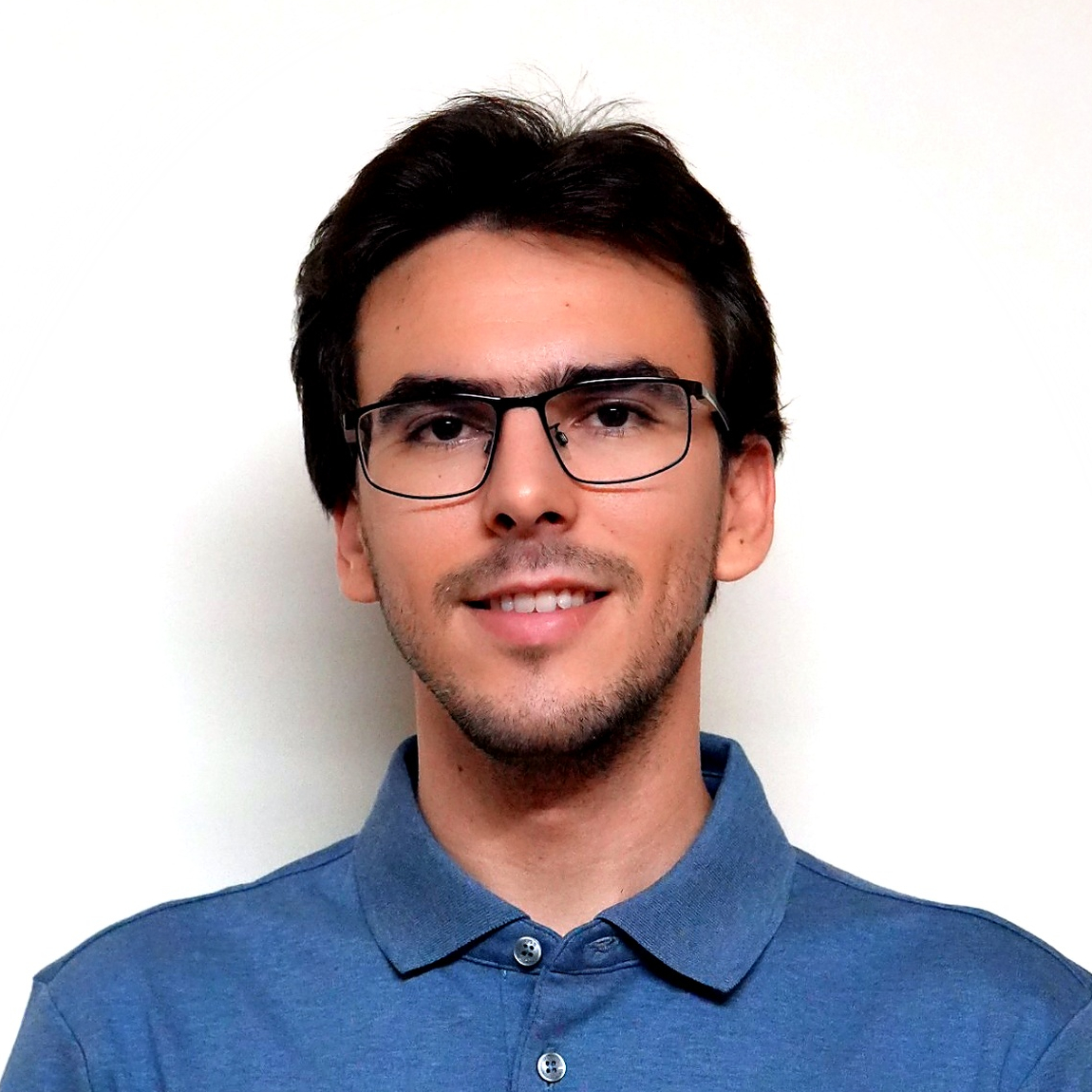
Portrait of Diogo Peralta Cordeiro

Diogo Peralta Cordeiro

Software engineer focused on backend systems, infrastructure and product delivery

  • C / C++
  • PHP / Symfony
  • Distributed Systems / APIs
  • Linux / Nginx / Docker

mail@diogo.site · Porto, Portugal

Software Engineering / Technical PM 5 pages Download PDF

Profile

I am a computer scientist from Porto, Portugal, completing a PhD in Computer Engineering at the University of Porto. My work spans software engineering, dependable systems, distributed social platforms, robotics, aerospace computing, machine perception, spatial interaction and technical education.

I am strongest where a role needs both engineering depth and coordination maturity: turning ambiguous technical problems into architecture, milestones, implementation, documentation and team learning. I have led funded open-source software work, supervised students, contributed to aerospace and robotics contexts, and designed workshops and teaching material for Computer Science audiences.

I am open to software engineering, technical project/program management, applied research and Computer Science teaching roles — especially positions where ownership, mentoring, rigorous execution and research-to-product translation are valued.

How I work

Leadership style. I work well in high-agency teams: written decisions, explicit trade-offs, small milestones, visible risks and a bias toward maintainable systems rather than clever one-offs.

Technical communication. I can move between code, architecture, project plans, teaching material and stakeholder conversations. I care about making complex systems understandable enough that others can operate, extend and teach them.

Mentoring. I have mentored student developers and taught technical workshops. I treat mentoring as an engineering multiplier: better explanations reduce future coordination cost and improve quality.

Experience

Education

PhD in Electrical and Computer Engineering

Faculty of Engineering, University of Porto

Supervisor: Prof. João Tasso de Figueiredo Borges de Sousa.

Research area: software-intensive interactive systems, machine perception, spatial/projection-based interaction, robotics-adjacent sensing and systems engineering.

Relevant activities:

  • Supervisor of Porto Space Team.
  • Member of the ANTAEUS CubeSat project context.
  • Technical talks and workshops for engineering audiences.
  • Research-to-deployment work connecting prototypes, users, evaluation and maintainable software.

Key areas: Projection-based AR, Pro-Cam systems, computer vision, machine perception, spatial interaction, systems engineering, experimental design, LaTeX, technical writing.

BSc in Computer Science

Faculty of Sciences, University of Porto

180 ECTS, of which 54 ECTS in Mathematics.

Activities and societies:

  • Member of EUGLOH's Joint Curricula Design work package and Student Board (2020-07-13 → 2021-07-30)
  • Member of the Faculty of Sciences' Pedagogical Council (2019-11-05 → 2022-06-17)
  • Freshers' teaching assistant for the Computer Science Department (2019-09-10 → 2021-07-30)
  • Founding member of the Hackers at Porto student society (since 2017-11-01)

Key contents:

  • Mathematics — numerical analysis, stochastic processes, operations research, linear algebra, analytic geometry, multivariable calculus, differential equations
  • Computing theory — graphs, logic and proof, computability, complexity, reactive systems
  • Computer systems — computer architecture, computer networking, operating systems
  • Programming — compiler construction, advanced algorithms and data structures, multiprocessor programming
  • Applications and professionalism — intelligent systems, interaction design, security, privacy, databases
  • Electrical engineering — automatic control, digital signal processing

Key areas: C, Java, Haskell, Prolog, SQL, Erlang, UNIX/shell, algorithms, data structures, concurrency, databases, networking, security, AI, numerical analysis, stochastic processes, control, signal processing.

Specialised Training

CubeSat Concurrent Engineering Workshop 2023

European Space Agency (ESA) Academy, ESA ESEC

A training week introducing university students to the concurrent design of a CubeSat mission. Guided by ESA experts, students learn to use COMET (Concurrent Model-based Engineering Tool) and to identify design drivers; divided into teams, they first create a subsystem concept and then realise an identified mission concept, function tree and product tree using concurrent engineering.

Key topics:

  • Introduction to concurrent engineering, systems engineering and requirements — Robin Biesbroek
  • CubeSat missions and technologies — Camille Pirat
  • CubeSat architectures — Ilja Skrypnyk
  • Increasing RAMS for CubeSats — Silvana Radu

Fly Your Satellite! Design Booster — Training Week

European Space Agency (ESA) Academy, ESA ESTEC

ANTAEUS, a prospective Fly Your Satellite! Portuguese team, attended this training week to deepen its knowledge of spacecraft design and project management.

Covered topics included: project management principles and COTS; legal aspects of CubeSat missions; communications and outreach; systems engineering principles; AIV and testing; introduction to MBSE; data-handling subsystem design and verification; flight-software development; EPS design and verification; structural, thermal and mechanisms design and verification; project management for CubeSats; AOCS design and verification; spacecraft operations; TT&C and ground segment; RAMS of CubeSats (FMEA, HSIA, FDIR); space-debris mitigation and trackability; and CubeSat mission analysis — delivered by ESA specialists including Alexander Kinnaird, Tomasz Szewczyk, Volkan Salma, Silvana Radu and David Evans.

Summer & Winter Schools

Cognitive and Affective Neurophysiology Summer School

Faculty of Psychology and Education Sciences, University of Porto

A 36-hour course on the acquisition, processing and analysis of EEG signal, held at the Laboratory of Neuropsychophysiology. Topics included introductions to EEG and ERP, ERP research design, principles of EEG data collection, signal processing and data extraction, statistical analysis of ERP data, and reproducibility and open-science practices in EEG/ERP research — taught by Fernando Ferreira-Santos, Fernando Barbosa, Tiago O. Paiva and colleagues.

SYSTEC Summer School — Estimation, Control, Optimisation and Data Science

Faculty of Engineering, University of Porto

Organised by the Research Centre for Systems and Technologies (SYSTEC) in collaboration with the ARISE associated laboratory, providing experience with applications of cyber-physical systems in robotics, energy, mobility, production systems and health.

Covered topics: introduction to drones; deep and machine learning; optimisation; path-following control for autonomous vehicles; optimisation in industrial settings; designing robotic solutions with freeware tools; and electric mobility case studies.

Certifications & Micro-credentials

Pedagogical Competences Certificate (CCP)

IEFP — Portuguese Employment and Vocational Training Institute, and CRIAP Institute

Credential ID F751769/2024. Final grade: 5 — Excellent.

Acquired competencies: analysing the context of intervention for a training programme; designing the programme; developing didactic and multimedia resources; planning learning activities; applying techniques of pedagogical interaction and group facilitation; managing diversity in the training context; using and managing collaborative and learning platforms; developing evaluation tools for training and learning outcomes; and assigning and reporting results.

Project Management Specialization

Google, via Coursera

Covered the foundations of project management; project initiation; project planning; project execution; and Agile project management.

Strategic Leadership and Management Specialization

University of Illinois Urbana-Champaign, via Coursera

Covered leading teams (developing as a leader; building effective team cultures), designing and managing the organisation, and business and corporate strategy.

Strategic Leadership: Impact, Change, and Decision-Making

Dartmouth College, via Coursera

Covered why smart executives fail (common mistakes and warning signs); decision-making as a blend of art and science; superbosses — managing talent and leadership; and lessons on wisdom and personal leadership.

ECSS E-40 Software Engineering

ESA Training on ECSS

Objectives: manage a software project for space and ground applications; understand the significance and procedures of the process; know what ESA expects; identify potential sources of project failure as early as possible; and bridge the system and software domains.

Cambridge English Level 2 Certificate in ESOL International — C1 (CEFR)

Cambridge Assessment English

Credential ID B6703928. Scores: Reading 200 (grade A, C2); Use of English 201 (grade A, C2); Writing 190 (C1); Listening 193 (C1); Speaking 195 (C1).

Quadcopter Simulation and Control (droneX)

Instituto Superior Técnico, University of Lisbon (MOOC Técnico)

Covered the modelling of quad-rotor drones (configurations, reference frames, block diagrams, dynamics); analysis of each subsystem in Scilab/Xcos, from rotor actuation to the dynamic and kinematic equations linking forces and moments to motion; and control of quad-rotor motion — common control solutions, stabilisation of vertical and angular motion, horizontal guidance, and approximations towards a more realistic simulator.

Seminars, Presentations & Workshops

Introduction to Git: Mastering Version Control

Symposium on Electrical and Computer Engineering, DCE23 — Doctoral Congress in Engineering, University of Porto

DCE23, the Doctoral Congress in Engineering, was held on 15–16 June 2023 at the Faculty of Engineering of the University of Porto. This hands-on workshop gave participants the fundamental concepts of version control and the features Git offers for code — or any text, including a thesis.

Topics: rsync, diff and patch; an overview of revision-control systems with briefings on RCS and Subversion; configuring Git and setting up GPG for signed commits; hands-on practice with many Git commands; tags; branching and merging; storage areas; a brief look at Git internals; and version-control etiquette.

Dependable Computing

Faculty of Engineering (via Porto Space Team) and Faculty of Sciences (via NuCC-FCUP and Hackers at Porto), University of Porto

A one-hour talk delivered twice in May 2023 — on the 4th at the Faculty of Engineering via Porto Space Team, and on the 17th at the Faculty of Sciences via NuCC-FCUP and Hackers at Porto.

Topics: model-driven development; introduction to real-time embedded systems (with emphasis on hard real time); functional, temporal and dependability requirements; execution management; introduction to reliability, availability, maintainability and safety (RAMS); architecture and components in space avionics; and safeguard mechanisms, with emphasis on redundancy.

Algorithms — Documentary TV Series, Ep. 4: Public Space

RTP 3, television

A series of six thematic television documentaries addressing essential technological questions: cryptocurrencies and blockchain, social networks and the public space, artificial intelligence and privacy. I discussed the impact of algorithmic decision-making on the content we consume and the discussions we have.

GNU social v3 and Unbound Actors

15th U.Porto Young Researchers Meeting (IJUP)

A presentation of FEP-2100 — its context and how we created it. Distinguished as the Best Oral Communication in the Engineering area of this edition.

Honours, Awards & Grants

Best work — Multimedia Communications Technologies, Summer@CTM 2022

INESC TEC

My internship on parametric human-body models was distinguished as the best of the MCT category by the jury of the Summer@CTM 2022 internship programme.

Best Oral Communication — Engineering

15th U.Porto Young Researchers Meeting (IJUP 2022)

“GNU social v3 and Unbound Actors” was distinguished as the best oral communication in the Engineering area.

NGI0 Discovery Fund grant

European Union Horizon 2020 — grant agreement No 825322

Funding awarded through the EU's Horizon 2020 research and innovation programme (2021-02 to 2022-02) to lead the development of GNU social v3.